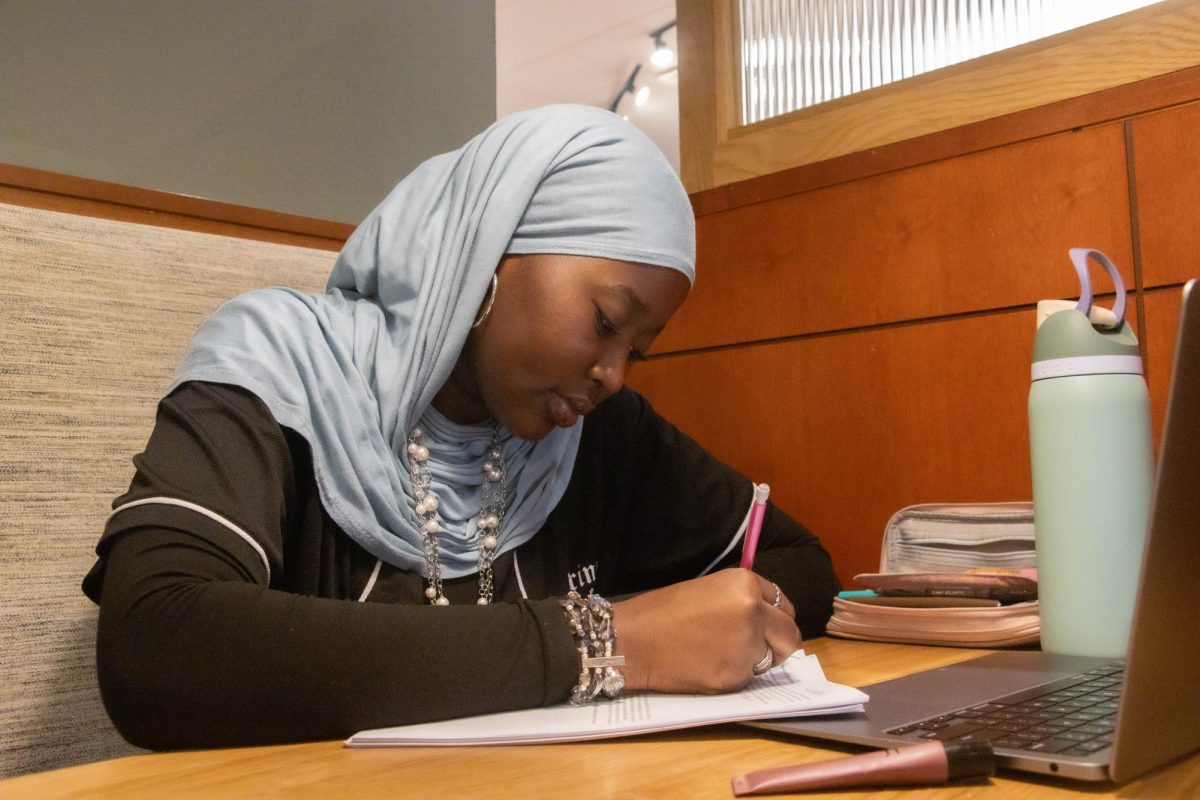
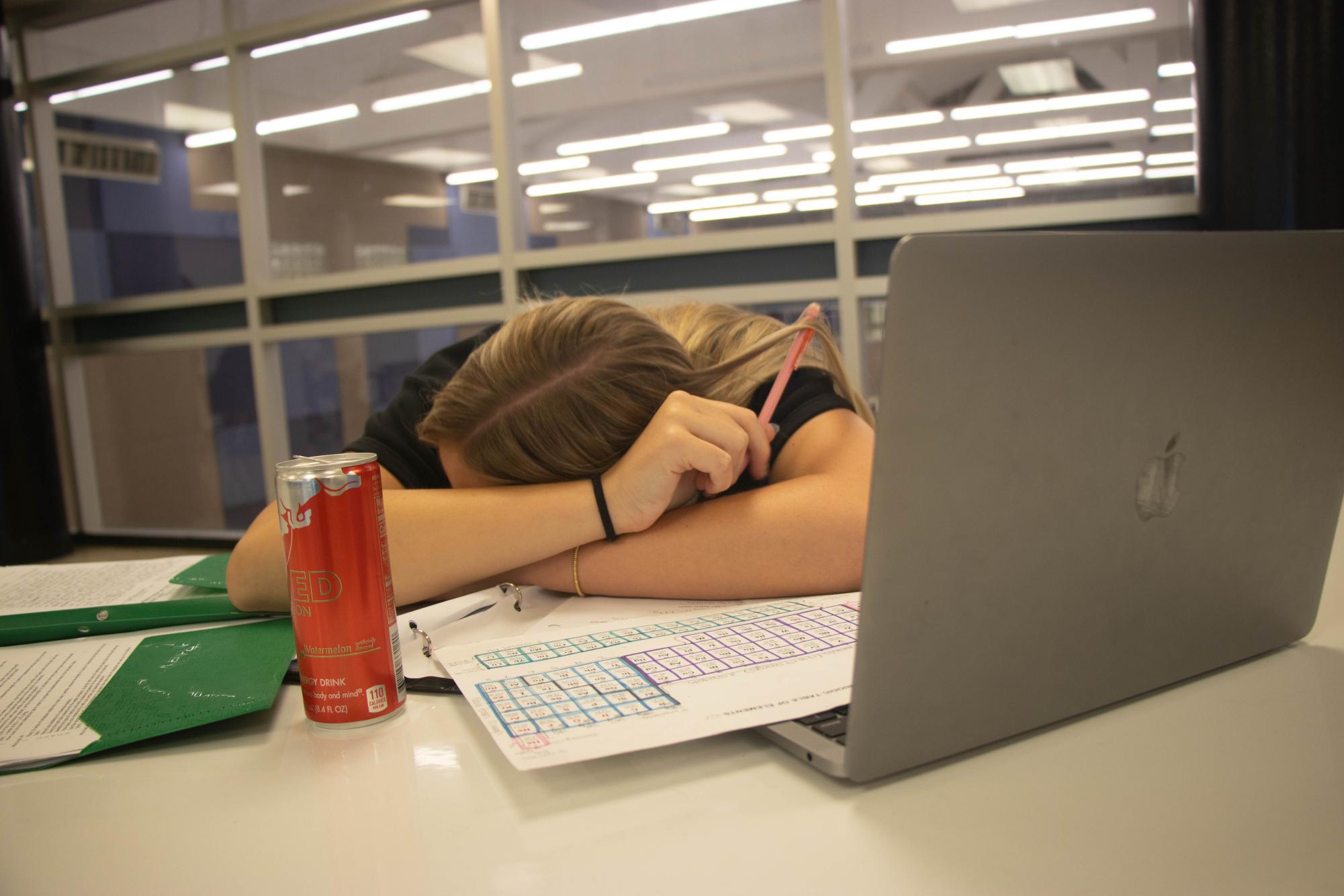


Nodding off during her first-period class, sophomore Nadia Daney, running on five hours of sleep with a Red Bull energy drink in hand, tries to keep her eyes open.
“I basically run on caffeine 24/7, and it is not good, but it’s the only way I can stay awake and focus in class,” Daney said.
She said she feels the effects of insufficient sleep, such as fatigue or decreased focus. To help her get through the day, she often relies on caffeine, which she finds helpful but not always effective.
“The energy drinks only work for so long; they eventually will dissipate and wear off,” Daney said.
Assistant professor at the University of Missouri-Kansas City (UMKC) Westley Youngren has a Ph.D. in clinical psychology and said energy drinks work by blocking sleep hormones, including melatonin.
“Caffeine’s not exciting you. It’s preventing you from being sleepy,” Youngren said.
He said caffeine can disrupt sleep, but some students may not experience these effects because of their age.
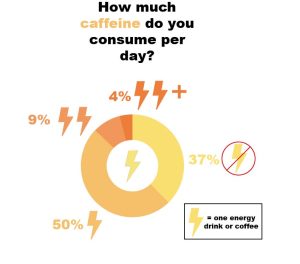
“A lot of them probably can (drink caffeine before bed) because their sleep is so healthy that it kind of can overpower that negative thing,” Youngren said.
Some students use energy drinks to counteract the effects of sleep deprivation. Youngren said he defines sleep deprivation as an individual going without sleep for an extended period. He said one of the main contributors to sleep deprivation in adolescents is social impacts, such as staying up late with friends and poor sleep habits.
AP Psychology teacher Heidi Gipple said sleep deprivation is a global issue in schools. She said teenagers are the most sleep-deprived group of people in the world.
“A big part of teenage life is experiencing sleep deprivation,” Gipple said. “Starting at 7:35 in the morning is usually pretty difficult for teenagers.”
She said several factors contribute to sleep deprivation, but the most prominent is early school start times, which conflict with teenagers’ circadian rhythms.
“[The] circadian rhythm is essentially your 24-hour biological clock. You have certain points of the day in which you’re feeling more alert, and other parts of the day where you feel a lot more sluggish,” Gipple said.
She said another reason teens are sleep-deprived is their willingness to sacrifice sleep in favor of other things, such as homework, sports, work or other activities.
“We’re always willing to kind of push it (sleep) off to the side,” Gipple said. “The more that we add to our plate, the less and less sleep we get.”
Gipple and Youngren said one way to reduce sleep deprivation is to ensure the bed is used for sleeping and not for homework, scrolling or reading. She said when the bed is used for other activities, the body starts associating it with those activities rather than with rest.
“If you lay down at night, your body doesn’t know which one of those to do, so it doesn’t do any of them,” Youngren said.
He also said the content consumed before sleep can affect it. He said peaceful, calming media can help with sleep, while negative, fearful media can increase heart rate and hurt sleep.
Gipple said improving sleep habits can help with sleep deprivation, though some may struggle to implement them consistently.
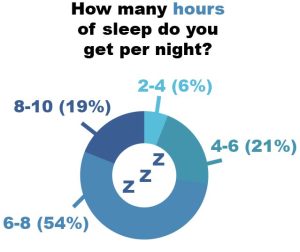
Junior Ian Thomas said he gets two to four hours of sleep on weeknights because of homework and studying. Additionally, he said his body has adjusted to staying up late, which also causes him to get less sleep.
“When I wake up, I’m quite tired. It takes me a full hour or so to fully wake up,” Thomas said.
To make up for his sleep deficit, he said he catches up on sleep on the weekends and sleeps during downtime in classes.
“If I see an opportunity, I can sleep after finishing an essay or a test,” Thomas said. “Then I can just put my head down and fall asleep.”
Youngren said recovering lost sleep isn’t as easy as people may think.
“If you only get four hours of sleep tonight, you still owe yourself another four,” Youngren said. “If you just sleep really poorly for several days, your body is going to need more and more sleep as it accumulates.”
Though a lack of sleep can be self-inflicted, some students’ sleep schedules are out of their control.
Senior Jonathan Alon is diagnosed with delayed sleep-wake phase disorder. Alon said it is a circadian rhythm disorder where a person’s internal clock is delayed, causing them to fall asleep and wake up two or more hours later than conventional times.
“I know what time I’ll be able to sleep. I just have no control. I couldn’t go to sleep earlier if I wanted to,” Alon said.
He said he always falls asleep after 2 a.m. and is unable to control when he actually falls asleep. He said he starts winding down about an hour beforehand and then relaxes until his body naturally drifts off to sleep. Before receiving his diagnosis, as a child, Alon said he struggled significantly with focus and irritability.
“When I was younger, I had yet to develop ways to deal with these problems. It’s very hard to regulate your emotions when you’re sleep-deprived, and I remember being so angry and irritable all the time,” Alon said.
Alon said when he was a child, he often felt unable to become the person he wanted to be because of constant sleep deprivation. He said he has now acclimated to the challenges of his disorder by watching what he eats and exercising.
“I think it’s more just something you learn to adapt to. It’s not like I have some sickness or something — my brain just doesn’t operate properly or operates too slowly,” Alon said.
Youngren said that the quality of sleep is more important than the number of hours spent sleeping. He said even after 10 hours of rest, people can still feel tired if their sleep quality is poor.
“Low amounts of quantity is the same as low amounts of quality,” Youngren said.
Gipple said sleep is one of the most important things for the well-being of a student.
“Get good sleep. Try your best to schedule it if you can. But it’s (sleep deprivation) definitely a problem. I wish I could solve it, but trying to get people educated as a first step,” Gipple said.